
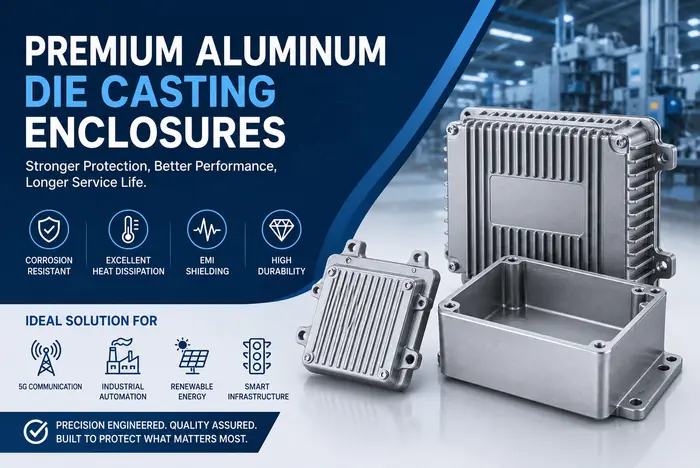
Choosing the Right Aluminum Alloy for Die Casting Enclosures: A Technical Guide for Reliable Performance
In modern industrial manufacturing, selecting the correct aluminum alloy is critical for ensuring durability, performance, and long service life.
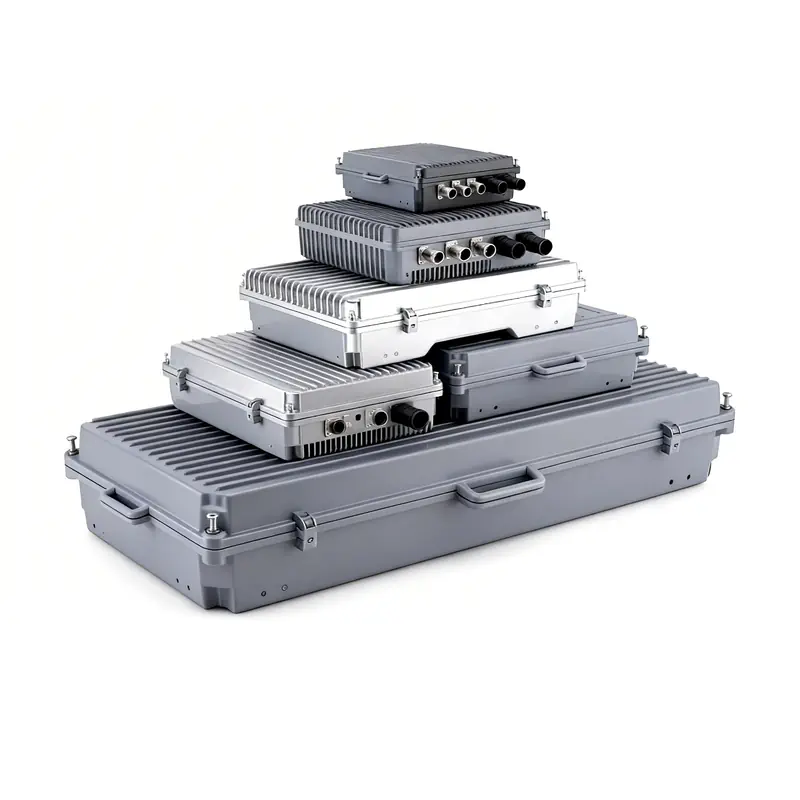
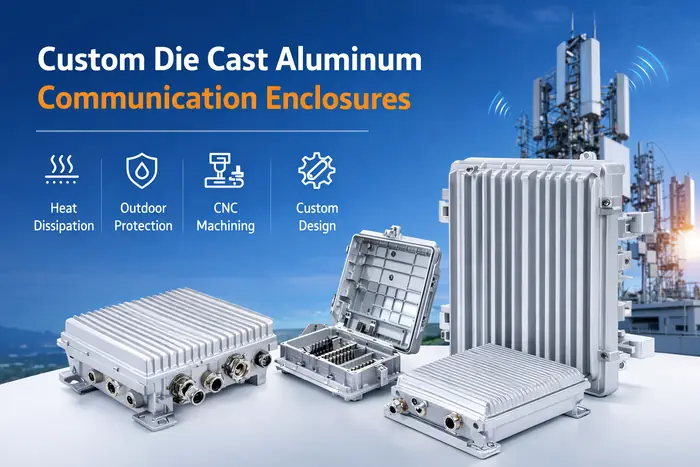
Die casting enclosures are widely used in electronics, telecom systems, and power infrastructure.
The material choice directly impacts heat dissipation, corrosion resistance, and mechanical strength.
Main Aluminum Alloys Used in Die Casting Enclosures
ADC12 Aluminum Alloy
ADC12 is one of the most widely used alloys in die casting applications.
It offers excellent fluidity, allowing molten aluminum to fill complex molds with precision.
This results in smooth surface finishes and reduces post-processing costs.
Its balanced mechanical properties and cost efficiency make it a preferred choice for large-scale production.
A380 Aluminum Alloy
A380 is commonly used in North American manufacturing environments.
It provides strong dimensional stability, even under high-temperature and high-load conditions.
This alloy combines good casting characteristics with reliable strength.
It is ideal for industrial enclosures that must maintain consistent performance over time.
A360 Aluminum Alloy
A360 is suitable for demanding applications requiring higher pressure tightness and strength.
Although slightly more challenging to cast, it delivers superior durability.
It performs well in high-temperature environments and protects sensitive internal components effectively.
This makes it a strong candidate for thin-wall yet high-strength enclosure designs.
Why Aluminum is Ideal for Die Cast Junction Boxes
Efficient Heat Dissipation
Aluminum has excellent thermal conductivity.
It quickly transfers heat from internal electronic components to the external environment.
This prevents overheating and ensures stable operation of equipment.
It is especially important for high-power communication systems and continuous-use devices.
Natural Corrosion Resistance
Aluminum forms a natural oxide layer when exposed to air.
This protective barrier prevents rust and extends the lifespan of the enclosure.
It performs well in humid, coastal, and outdoor environments.
High Strength with Lightweight Structure
Despite its low weight, aluminum offers strong impact resistance.
It protects internal components from mechanical damage.
This reduces maintenance costs and improves product reliability in harsh environments.
Key Functional Advantages of Die Casting Housings
EMI Shielding Capability
Metal enclosures effectively block electromagnetic interference.
This ensures stable signal transmission in communication devices.
Compared to plastic housings, aluminum provides superior shielding performance.
Precision and Complex Geometry
Die casting allows the creation of intricate designs in a single process.
Features such as cooling fins, mounting holes, and internal partitions can be integrated directly.
This improves assembly efficiency and reduces production time.
Long Service Life
Aluminum enclosures maintain structural integrity for decades.
They resist temperature fluctuations, UV exposure, and environmental stress.
This makes them suitable for long-term infrastructure projects.
Surface Treatment for Enhanced Performance
Powder Coating Protection
Powder coating creates a durable outer layer.
It protects against chemicals, moisture, and UV radiation.
This improves both appearance and longevity.
Salt Spray Resistance
For marine or coastal applications, salt spray testing ensures corrosion resistance.
This guarantees stable performance even in aggressive environments.
Custom Finishing Options
Different colors and finishes can be applied based on project requirements.
This enhances brand identity and improves safety visibility.
Reliable Manufacturing and Quality Assurance
High-Pressure Die Casting Equipment
Advanced casting machines ensure consistent product quality.
They enable the production of both large and highly detailed components.
This supports high-volume manufacturing with stable output.
Engineering and Design Support
Professional engineering teams optimize mold design before production.
Simulation tools help eliminate defects such as air pockets and weak points.
This improves product reliability from the initial stage.
Strict Quality Inspection
Each enclosure undergoes precise dimensional and structural testing.
Advanced measuring tools ensure tight tolerances are met.
This guarantees that every product is ready for immediate installation.
Conclusion: A Smart Choice for Industrial Enclosure Procurement
Selecting the right aluminum alloy and manufacturing process directly affects product performance and lifecycle cost.
High-quality die casting enclosures provide excellent protection, stability, and efficiency.
For buyers and engineers, choosing a reliable manufacturer ensures consistent supply and technical support.
Requesting a quotation or technical consultation is the first step toward optimizing your project performance and reducing long-term costs.
Related Products
Popular Post
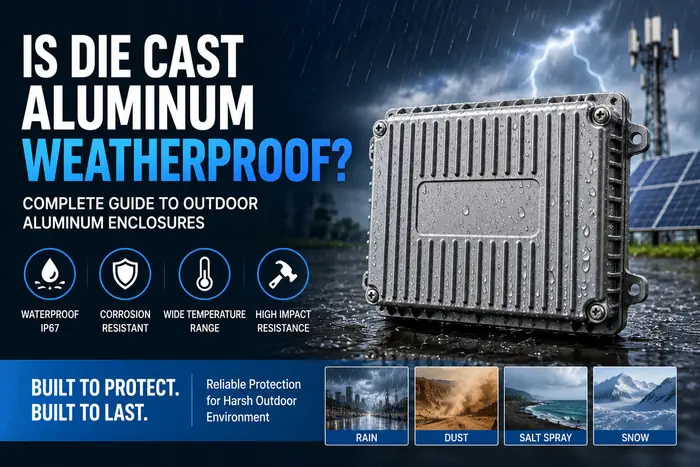
Is Die Cast Aluminum Weatherpr
Is Die Cast Aluminum Weatherproof? Complete Guide to Outdoor......
Best Aluminum Alloys for Die C
Choosing the Right Aluminum Alloy for Die Casting Enclosures......

Why Choose Die Casting Aluminu
Why Are Die Casting Aluminum Enclosures Essential for Outdoo......

Die Casting Aluminum Telecom E
Introduction Aluminum telecom enclosures play a critical ......
Custom Die Cast Aluminum Commu
Modern communication systems rely on stable and secure hardw......